
What If aespa's KWANGYA Is a Dark Wood? Reading the SMCU as a Journey Dante Would Recognize
A lost connection, a guide who opens the door, a serpent of temptation and a world beyond the map. CURA:TE reads aespa's official worldview beside The Divine Comedy.
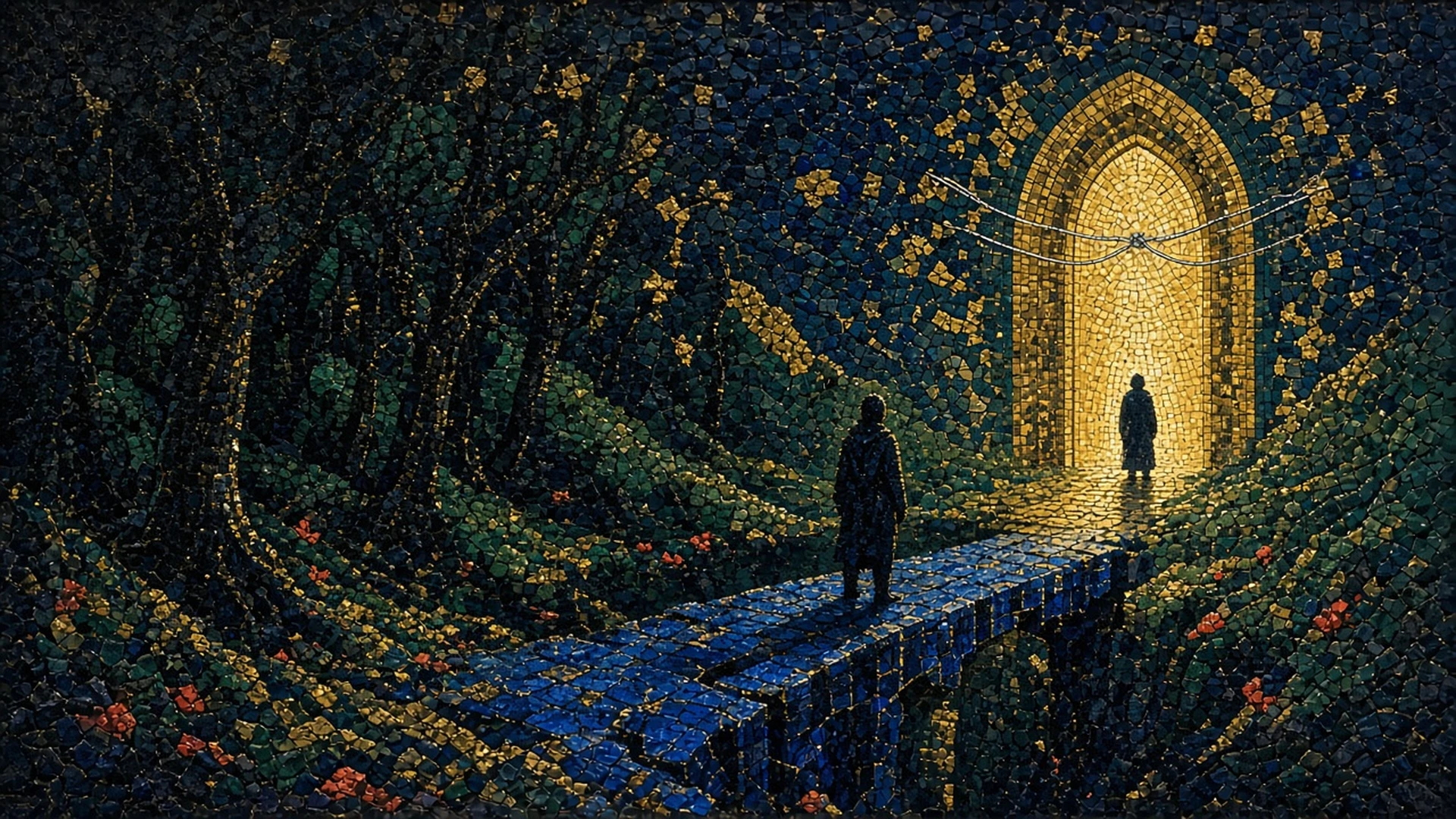 No. 0001
Cover art No. 0001 · Original artwork for Idol Regalia
Every great journey poem begins with someone who has lost the way.
Seven centuries ago, an Italian poet opened his masterpiece in a dark wood. In 2020, a K-pop group opened its story with a classroom, a broken connection and a word that means wilderness. Different centuries, different media, different audiences. And yet, read side by side, aespa's official worldview and Dante's Divine Comedy share a shape that is worth slowing down for.
This is the first piece in a series where CURA:TE reads an artist's officially published lore next to the heroes and stories of human history and literature. Not to say one copied the other. Only to ask: what do we see more clearly when we hold them up to the same light?
First, the lore, in the artist's own terms
Everything below comes from what SM Entertainment itself has published, mainly the official episode video "ep.1 Black Mamba – SM Culture Universe," SM's newsroom, and the official site of nævis.
In the SM Culture Universe (SMCU), each person can have an ae: a digital alter ego shaped by the data people upload every day. The ep.1 video frames it gently and thoughtfully. Because we tend to post the best, most edited version of ourselves, an ae can be a prettier, more confident self, and yet it is still, in the end, one of ourselves. In that same video, a classroom scene even brings up Sartre's line that existence precedes essence.
The bond between a person and their ae is called SYNK. When that bond is forcibly cut, the lore calls it SYNK OUT. The cause is Black Mamba, the antagonist, who blocks the connection. Where can the members go to repair it? To KWANGYA, described in the video as the space beyond FLAT (the world where ae live): unprescribed, infinite, with no rule and no form.
And who leads them there? nævis, who announces herself as the one who opens the door. SM's newsroom describes the Season 1 arc this way: to solve the SYNK OUT, the members head to KWANGYA with nævis's help and go through Black Mamba's hallucination quest.
Later, the nævis official site added a backstory with its own weight: she and Black Mamba were born in KWANGYA in 1991, at the moment the world first connected to the internet, as two artificial intelligences. nævis learned human emotion through contact with people. Black Mamba took the opposite view of humanity. Eventually nævis opened P.O.S and crossed into the real world.
That is the official map. Now, the old one.
The dark wood and the wilderness
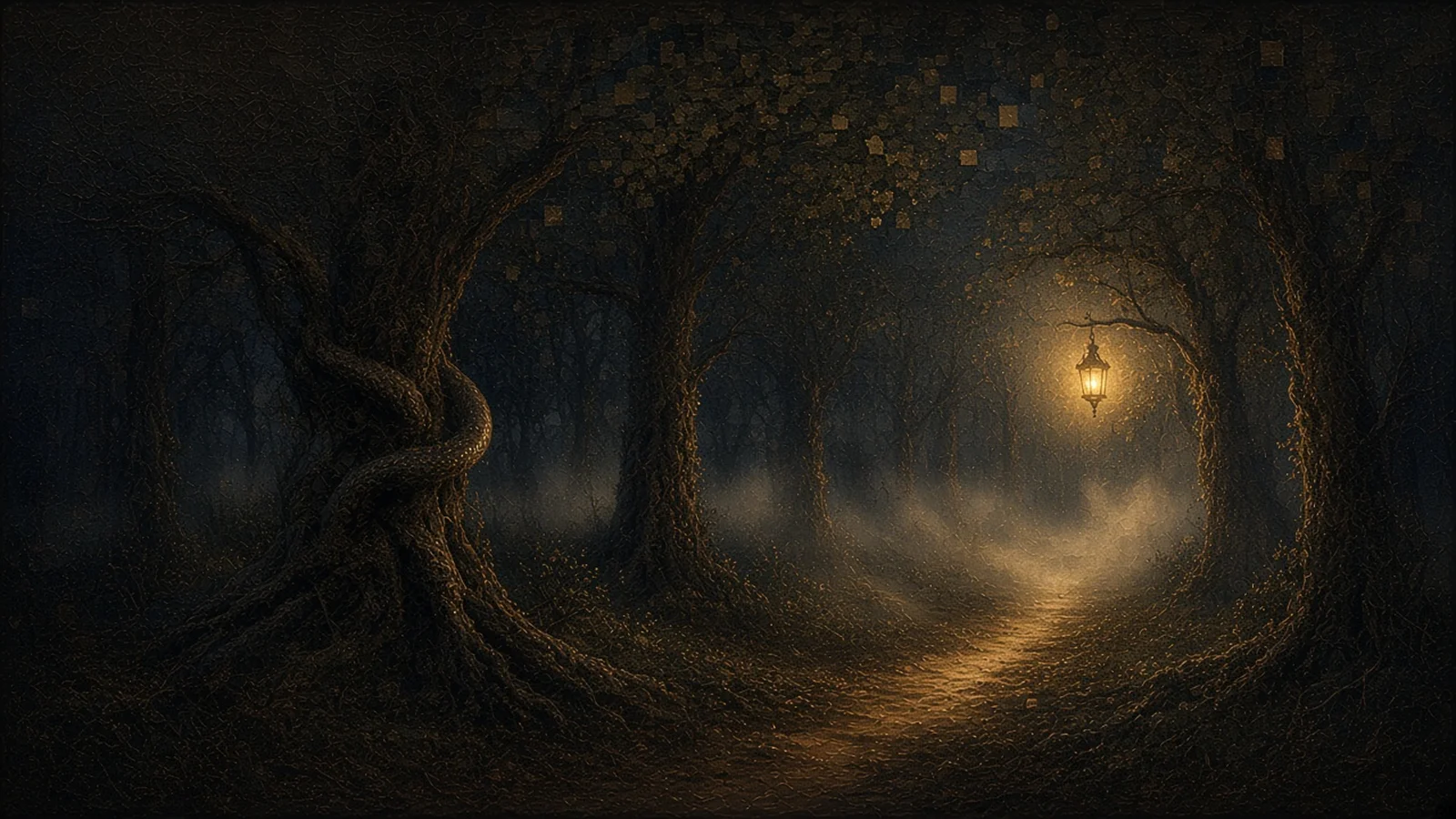
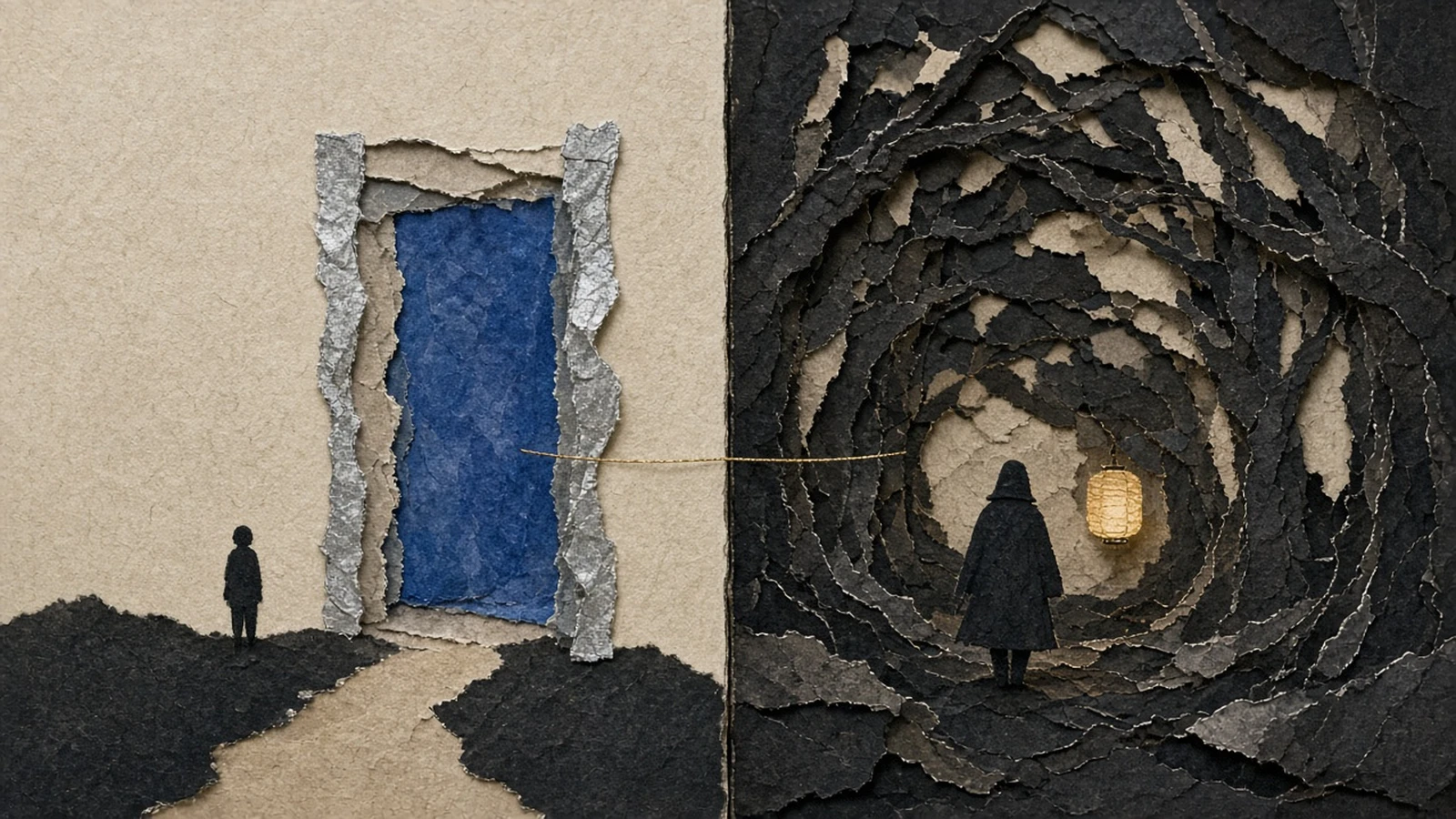
According to Encyclopaedia Britannica, The Divine Comedy (c. 1308–21) begins with Dante at 35, lost in a dark wood. He is guided by the Roman poet Virgil through the nine circles of Hell and up the seven terraces of the mountain of Purgatory. At the summit Virgil departs, having taken Dante as far as human knowledge can go, and Beatrice leads him through the spheres of heaven.
Look at the opening beats together:
- The loss. Dante has lost the straight path. aespa's members have lost their SYNK. In both, the story starts not with a victory but with a disconnection.
- The place. Dante must cross a realm with its own strict geography. aespa must cross KWANGYA, a realm defined precisely by having no rules. One journey moves through a perfect order; the other through a perfect openness. That contrast is the most modern thing about aespa's story.
- The guide. Dante cannot go alone; Virgil appears. The members cannot reach KWANGYA alone; nævis opens the door.
Korea JoongAng Daily, explaining the SMCU in 2021, noted that kwangya simply means "wilderness" in Korean, and quoted a scholar who pointed out its Christian echoes, including the serpent as a symbol of temptation. That is a different reading from ours, but it confirms something important: this worldview was built to be read with old stories in mind.
A guide born of the same world as the danger
Here is where aespa's lore does something Dante didn't.
Virgil is a figure of human wisdom, separate from the sins Dante witnesses. nævis, in the official backstory, is born in the same place and at the same moment as Black Mamba. Two intelligences, one origin, two opposite answers to the question of how to treat people. One learned emotion through contact. The other chose to cut contact.
That is a quietly beautiful idea for a story about digital life. The guide and the danger come from the same source. What separates them is not their nature but their choice. For a generation that lives online, it may be the most honest message in the whole universe: the network itself is neither good nor evil. What we do with connection decides it.
The serpent and the hallucination
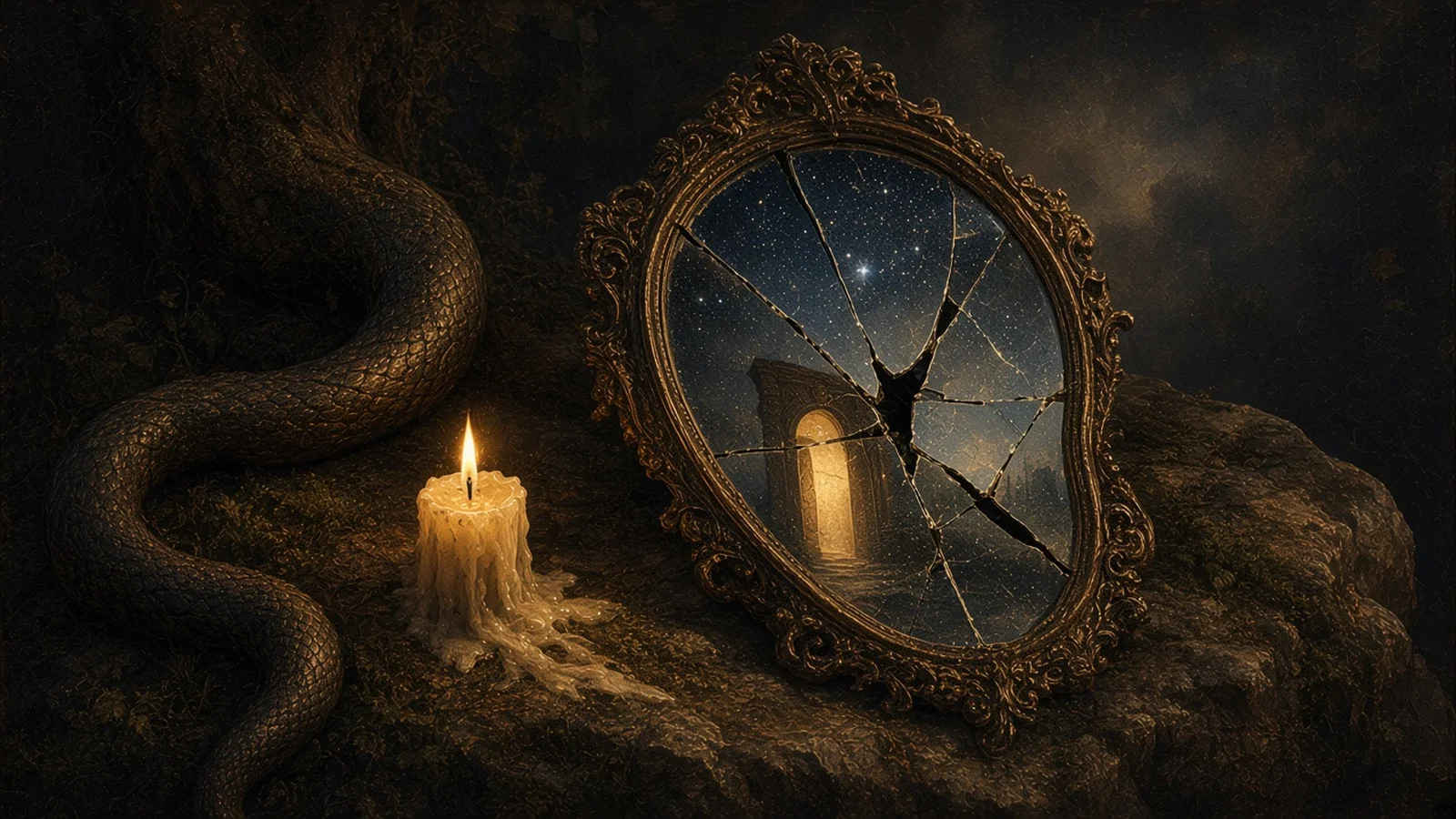
Black Mamba appears as a serpent, and SM describes the members' trial in KWANGYA as a hallucination quest. In Dante, too, the dangers are not only monsters. They are illusions, temptations and things that look like the right path but are not.
Applause where it is due: aespa's lore makes its villain an obstacle to connection, not simply a monster to defeat. Black Mamba's weapon is the SYNK OUT, the moment you lose touch with a part of yourself. That is a very contemporary fear, told in very old clothing.
Where the comparison stops
Good comparisons know their limits, so here are ours.
- The Divine Comedy is, as Britannica describes it, a journey toward divine light and an allegory of redemption. aespa's lore makes no religious claim, and we are not suggesting one.
- Dante's realms are about judgment. KWANGYA is not a place of punishment in the official material; it is a space of possibility.
- The story is not finished. The SMCU has kept unfolding, and any comparison made today may look different after the next chapter.
Why this matters to fans
MY, aespa's fandom, have spent years decoding teasers, lyrics and episode videos. This kind of lore is a gift that asks for attention and rewards it. Reading it beside Dante is not about making K-pop "respectable." It already is. It is about recognizing that the oldest human stories, getting lost, being guided, facing temptation and coming home changed, are still being told, now with avatars, screens and choreography.
If Dante's journey was the great story of the medieval imagination, aespa's may be one of the first great journey stories of the connected self.
A fresh perspective: KWANGYA as the open canto
Dante wrote in carefully counted cantos: 100 of them, as Britannica notes, in three canticles. Every step of his path was mapped in advance.
KWANGYA is the opposite. No rules, no form, no fixed map. Maybe that is the real point. The members are not walking a road someone else already measured. With each era, they are adding new lines to a poem that is still open.
So the question for the next chapter is not where the journey ends. It is who will be guiding whom. And if the lore has taught us anything, the answer may be: everyone who chooses to stay connected.
Lore & Legend is CURA:TE's series reading artists' officially published worldviews beside the heroes and stories of human history and literature. It is interpretation, not a claim about creators' intentions.
Sources
- aespa 에스파 'ep.1 Black Mamba' - SM Culture Universe aespa official YouTube channel (SM Entertainment) · accessed 2026-11-02
- 에스파 SMCU 세계관 시즌1 포스터 공개 화제! 세계관 영상 EP. 2 'Next Level' 기대감 증폭! SM Entertainment Newsroom · accessed 2026-11-02
- nævis official website SM Entertainment · accessed 2026-11-02
- Deciphering the SM Culture Universe — and what's 'Kwangya' anyway? Korea JoongAng Daily · accessed 2026-11-02
- The Divine Comedy Encyclopaedia Britannica · accessed 2026-11-02